
Insurance Claims
Filing a Claim on Your Hail Damaged Roof: A Texas Homeowner's Guide
How the Texas roof claim process actually works — from the first photo you take to the final insurance check — written by a Plano roofer who handles these every storm season.
Key Takeaways
- Most Texas policies give you one year from the storm to file. Don't wait — the longer you sit on it, the harder it is to prove.
- The single biggest factor in claim outcomes: have your roofing contractor on the roof with your adjuster. One pro alone misses things two pros together don't.
- You'll get paid in two parts: Actual Cash Value first (minus deductible), then Recoverable Depreciation after the work is done.
- DFW hail events in recent years have caused billions of dollars in combined property damage. If a storm passed through, your roof was likely affected — even if it looks fine from the ground.
- Avoid storm-chasers, never let anyone "waive your deductible" (that's fraud in Texas), and don't sign anything before you've read it.
Filing a roof claim after hail damage in Texas is a six-step process. Document the damage. Call your insurer. Get a roof inspection. Meet your adjuster. Receive the claim decision. Complete the repairs.
Every step has a tight timeline and a few small details that can cost you thousands if you skip them.
I’ve walked dozens of Dallas–Fort Worth homeowners through this exact process. Every spring my phone starts ringing the morning after a storm, and the same questions come up. This guide is what I tell those callers — in order.
When to file (and why every week matters)
Most Texas homeowners policies require you to file within one year from the date of the storm. A few allow two. Waiting that long is almost always a mistake.
Memory fades. Adjusters need to tie damage to a specific storm event. The fresher the event, the easier that connection is to make.
New damage piles on. A roof with unrepaired hail damage gets worse with every subsequent storm. Wait too long and your insurer can argue the damage is from neglect, not the original event.
Roofers get slammed. After major DFW hail events, the best contractors are booked out two or three months. The earlier you start, the more options you have.
Look in your policy under “Notice of Loss” or “Duties After a Loss” for the exact filing window.
Step 1: Document the damage before you call anyone
Walk your property with your phone. Take video and photos of:
- The date of the storm. Screenshot the weather report, news article, or your neighbor’s Instagram story from that day. Proof of when the event happened matters.
- Dents on metal surfaces. Gutters, downspouts, AC condenser fins, window screens, mailboxes. These are the easiest impact indicators to spot from the ground.
- Anything else that took a hit. Patio furniture, broken patio panels, dings in your car.
- Interior signs. Water stains on ceilings, drywall bubbling, damp insulation in the attic.
Do not climb on the roof yourself. A wet roof after a storm is incredibly dangerous, and walking on impact-compromised shingles can do more damage. That part is for a professional.
Step 2: Call your insurance company
Once you have ground-level documentation, call the claims department (not your local agent — though your agent can guide you). Have ready:
- Policy number
- Date and approximate time of the storm
- Quick description of what you’ve observed
- Your photos
The insurer will:
- Assign you a claim number — write it down. You’ll use it constantly.
- Schedule an adjuster visit — usually 5 to 14 days out.
- Send you a claim packet explaining what’s covered.
Don’t agree to anything specific yet. Just open the claim.
Get a free roof inspection before your adjuster arrives.
You'll want a professional roofer's documented assessment in hand before the insurance adjuster shows up. Free, no obligation — and we'll meet the adjuster on the roof with you.
See our storm damage process →Step 3: Get a local roofer’s inspection
Before the adjuster comes, get a free inspection from a local, established roofing contractor. Three rules:
Avoid storm-chasers. After every major DFW hail event, out-of-state companies flood the area with door-knockers offering free roofs. Many are unlicensed, uninsured, and disappear after collecting your deductible. Stick with contractors who’ve been in the metroplex for years.
Get it in writing with photos. A verbal opinion is worthless to an adjuster. You need documented evidence.
Don’t sign a contingency contract yet. Some contractors push agreements that bind you to them if your claim is approved. Read everything carefully before you sign anything.
Step 4: Meet your adjuster on the roof
This is the single most important step in the whole process.
When the insurance adjuster comes to inspect your roof, have your roofing contractor on the roof at the same time.
Why?
Adjusters work for the insurance company. Their job is to write the smallest accurate estimate possible. That’s not malicious — it’s their incentive structure.
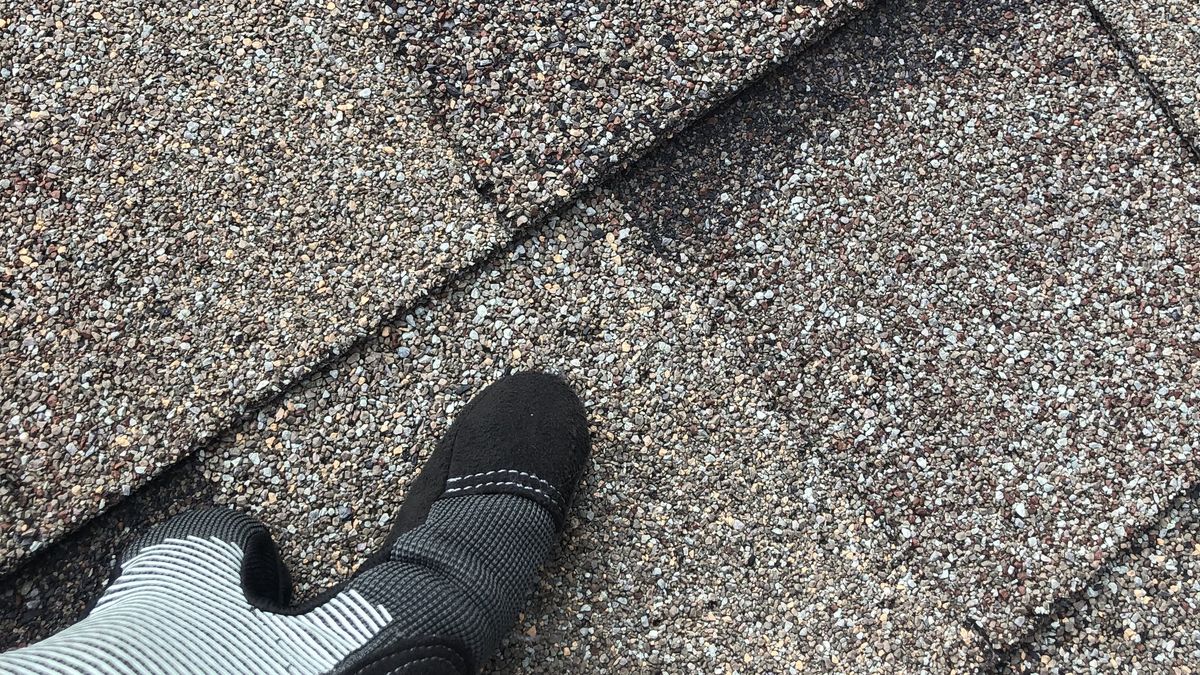
A roofing contractor working with you knows what to point out. Bruised shingles in valleys. Displaced granules. Damaged flashing around chimneys and skylights. Hail-pocked vents and pipe boots. Things an adjuster can miss or undercount, especially under time pressure.
Two pros on the roof together create a documented record that’s much harder to dispute. In my experience, this single step is the difference between a partial-replacement decision and a full-replacement decision in most contested DFW claims.
Step 5: Receive your claim decision
A few days to a few weeks after the adjuster visit, you get a written claim decision. Three numbers matter:
| Number | What it means |
|---|---|
| Replacement Cost Value (RCV) | What it costs to fully replace the damaged items today |
| Actual Cash Value (ACV) | RCV minus depreciation based on age of roof |
| Recoverable Depreciation | The gap between RCV and ACV — held back until you actually complete the work |
Plus your deductible — typically 1% to 2% of your home’s insured value in Texas.
Your initial check will usually be ACV minus deductible. You only collect the recoverable depreciation after you complete the repairs and your contractor submits proof to your insurer.
If the scope of work is missing things your contractor identified, you can file a supplemental claim with additional documentation. This is extremely common — adjusters miss damage all the time on first pass, especially on complex roof geometry.
Step 6: Complete the repairs
Now you actually fix the roof:
- Sign a contract with your chosen roofer for the agreed scope.
- Endorse the insurance check (it’s typically made out to you AND your mortgage lender if you have one — the lender will need to sign off before you can deposit it).
- Schedule the work. Most DFW single-family replacements take a single day.
- Submit the final invoice and certificate of completion to your insurer.
- Receive the recoverable depreciation.
Done.
Mistakes I see every single season
After watching hundreds of these claims unfold, here’s what goes wrong over and over:
1. Accepting the first scope without question. Adjusters miss damage all the time. Get a second look.
2. Letting someone “waive” your deductible. Some unscrupulous contractors offer this as a sales tactic. It’s a form of insurance fraud under Texas law, and homeowners can be held liable. Don’t.
3. Hiring out-of-state storm chasers. They disappear after collecting your check. Always verify local references and current insurance certificates.
4. Waiting too long to file. Once your filing window closes, you’re stuck. Period.
5. Skipping the contractor at the adjuster meeting. The #1 reason claims get underpaid.
6. Choosing a roofer by lowest bid alone. A 30-year shingle is only worth what the installer knows. Cheap labor often means decking inspection skipped, underlayment cut, flashing reused. Compare scopes line by line.
When to hire a public adjuster
If your insurer denies your claim, lowballs the scope dramatically, or stonewalls you, you can hire a public adjuster — a licensed professional who represents you (not the insurance company) for a percentage of the settlement, usually around 10%.
Public adjusters can be effective on contested claims. Most homeowners don’t need one if they have a competent local roofing contractor at the adjuster meeting.
How long does this take?
Realistic DFW timeline:
| Step | Time |
|---|---|
| File claim → adjuster visit | 1–2 weeks |
| Adjuster visit → claim decision | 1–3 weeks |
| Claim decision → contractor scheduling | 1–4 weeks |
| Roof replacement | 1 day for most homes |
| Final payment from insurer | 1–2 weeks after completion |
Total: typically 4–10 weeks from storm to finished roof and final payment.
After major events the timeline stretches. The May 2024 storm flooded adjusters with claims for weeks, and 2025 was just as bad. The earlier you start, the shorter your wait.
Just had a hailstorm? Start with a free inspection.
We'll document your roof with a written photo report — yours to keep whether you file a claim or not. If you do file, we'll meet your adjuster on the roof so nothing gets missed.
Schedule a Free Inspection →Frequently asked questions
How do I know if my roof actually has hail damage?
You usually can’t tell from the ground unless damage is severe. Telltale signs: dents on gutters, downspouts, AC fins, or window screens; granules accumulating at the base of downspouts; neighbors getting new roofs. The only way to know for sure is a roof-level inspection.
Will filing a claim raise my premium?
Storm and hail damage claims are typically considered “acts of God” and don’t directly raise individual premiums the way at-fault claims do. Statewide claim volume can affect rates over time. If you’re worried about your specific situation, call your agent.
What if my claim is denied?
You can request a re-inspection with additional documentation. If still denied, you can hire a public adjuster (typically 10% fee), file a complaint with the Texas Department of Insurance, or in serious cases consult a contract attorney. Most denials I see come from inadequate initial documentation — a thorough first inspection prevents most of them.
Can my insurance company drop me for filing a claim?
Texas law restricts non-renewal based on a single weather-related claim. Multiple claims over a short window can be a different story. Your insurer’s specific underwriting practices matter — ask your agent before filing if you’re already on thin ice.
Should I get multiple roofing quotes?
Yes, but be skeptical of dramatic price differences. A bid that’s 30% lower than others usually signals cut corners — cheaper underlayment, decking inspection skipped, flashing reused, fewer workers, faster install. Compare scopes line by line, not just totals.
What if my roof is older than 10 years — will insurance still pay full replacement?
Depends on your policy. Most policies pay Replacement Cost Value (RCV) on roofs under 20 years old. Older roofs may be limited to Actual Cash Value (ACV), which factors in depreciation. Check whether your policy has an “Actual Cash Value Loss Settlement” endorsement for roofing — that’s the one to watch for.
A final note
The Texas insurance claim process for hail damage isn’t built to be friendly to homeowners — it’s built to be predictable for insurance companies. But it’s workable, and most legitimate claims get paid when you follow the right steps.
The single best thing you can do is have a local, established roofing contractor in your corner from the first phone call.
If you’ve had recent storm damage — or even if you’re just not sure — schedule a free inspection. You’ll get a written photo report either way. That documentation is yours to keep, claim or no claim.