
Maintenance
The 5 Most Common Roof Problems in Plano Homes
The five issues we see on Plano roofs over and over — and what each one means for your home's health and resale value.
Key Takeaways
- Plano sits in DFW's central hail corridor — homes here see hail damage more often than almost anywhere else in the metroplex.
- Most Plano homes built in the 2000–2010 boom now have builder-grade roofs at end-of-life (15+ years old).
- Pipe boots, chimney flashing, and ridge vents are the three components that fail first on most Plano homes — and the easiest to overlook.
- Granule loss from south-facing slopes is the silent killer of Plano roofs — most homeowners don't notice until leaks start.
- An annual inspection catches all five of these problems before they become expensive repairs.
I’ve been on roofs in Plano constantly for years. The same five problems keep showing up. Some are storm-related, some are wear-related, but every one of them is fixable — and most are way cheaper if you catch them early.
Here are the ones we see most often, in order of frequency.
1. Hail damage (visible and invisible)
This is the #1 Plano roof problem, by a wide margin. The city sits in the heart of DFW’s central hail corridor and has been hit by major events nearly every spring storm season.
What we see:
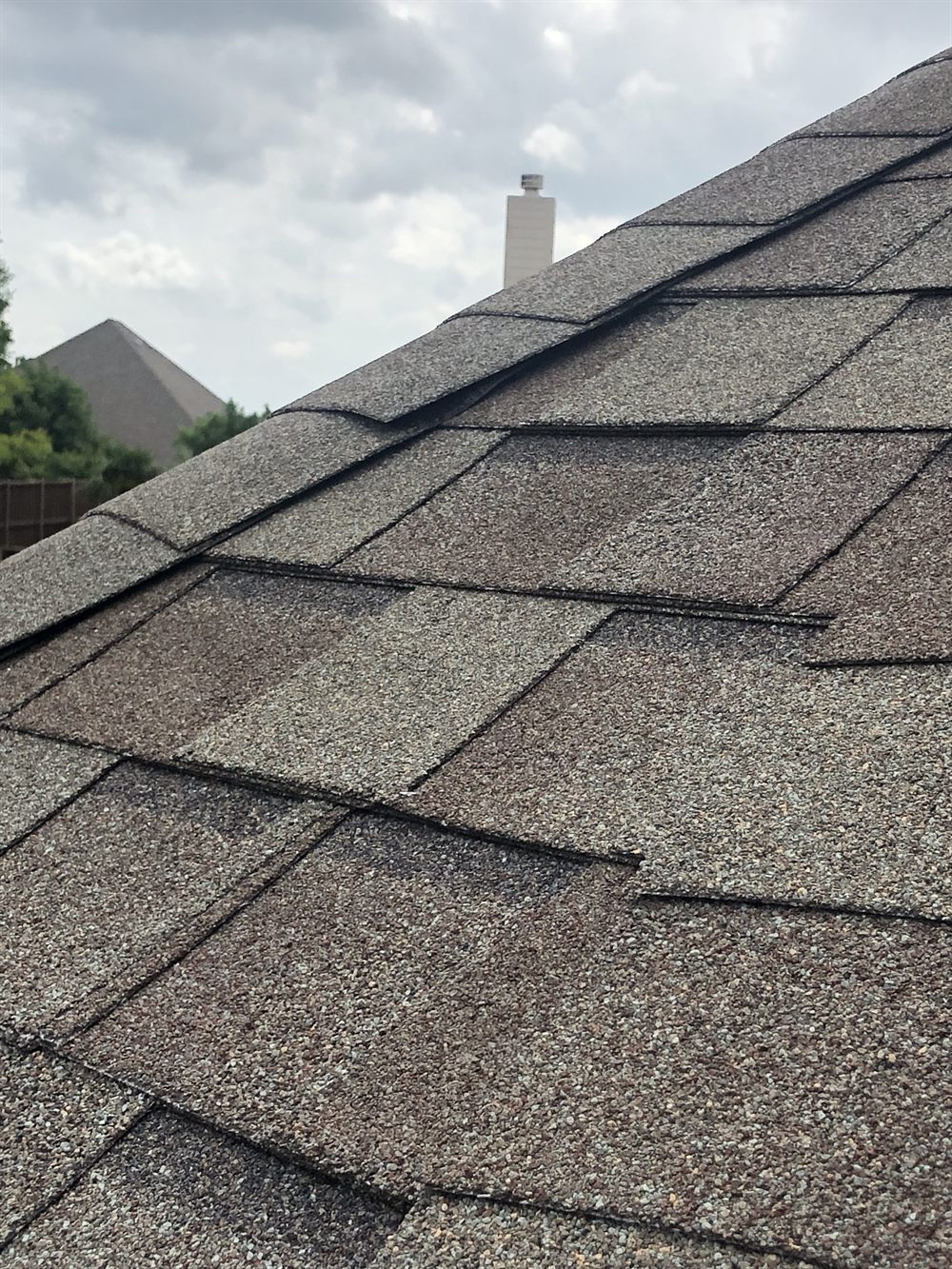
- Visible bruising on asphalt shingles where granules have been knocked off
- Cracked or split shingles from larger hail
- Damaged metal flashing around chimneys and skylights
- Dented vents and pipe boots that cause leaks within a year or two
What homeowners often miss: hail damage isn’t always immediately visible from the ground. A roof can look “fine” from the curb while having dozens of impact bruises across the surface. The damage shows up later as leaks, accelerated granule loss, or a denied insurance claim if you wait too long to file.
What to do: After any major Plano storm, schedule a free inspection within 30 days. Documentation matters even if you don’t end up filing a claim.
2. Failing pipe boots and vent flashing
Pipe boots are the rubber/neoprene collars where plumbing vents come through the roof. In Plano, they fail constantly.
Why? The builder-grade pipe boots installed on most 2000s-era Plano homes are made of inexpensive neoprene that breaks down under intense UV after 8–12 years. They crack around the pipe, then water runs straight down the plumbing chase into your bathroom or laundry room.
Symptoms:
- Water stains on the ceiling directly under or near a bathroom
- Damp insulation around plumbing vents (visible if you check the attic)
- Visible cracks in the rubber collar at the base of the vent pipe
What to do: Pipe boots are cheap to replace ($150–$300 typically) and last 15+ years with modern rubberized polymer designs. Don’t ignore this — pipe boot leaks rot decking and create mold problems if left untreated.
3. Granule loss on south-facing slopes
DFW’s intense sun is brutal on asphalt shingles. The south-facing slopes of every Plano home age 30–40% faster than north-facing slopes because of UV exposure.
What it looks like:
- Bald or near-bald patches on the south slope while the rest of the roof looks fine
- Sandy black grit accumulating in gutters and at downspout bases
- Sun-faded color on the south slope vs. richer color on shaded slopes
- Cracked or curled shingles on the most exposed areas first
Why it matters: granules protect the asphalt mat from UV. Once they’re gone, the underlying asphalt degrades quickly — within 1–2 years from “balding starts” to “needs replacement.”
What to do: If your south slope is noticeably worn while the rest looks okay, ask about partial replacement (south slope only) vs. full replacement. Sometimes a partial works; usually it’s a bandage that pushes you to full replacement within a few years. Get an honest contractor’s read.
Worried about any of these on your Plano home?
Free inspection with a same-day written photo report. We're Plano-based, so response is fast — usually within 24 hours.
See our Plano service area →4. Chimney and skylight flashing failures
The metal flashing where your chimney meets the roof, or where a skylight is set into the deck, fails on a predictable schedule.
In Plano, we see:
- Step flashing pulling away from brick chimneys due to expansion/contraction over years
- Cricket flashing rotting behind chimneys where water pools (very common on older Plano homes)
- Skylight flashing seal failure at the top edge after 10+ years
- Damaged flashing from hail (any 2-inch-plus hail event can dent or displace flashing)
Symptoms:
- Water stains on the ceiling around the chimney chase
- Drips inside the fireplace itself
- Damp drywall along the chimney wall on the upper floor
What to do: Flashing repairs are skilled work. Get an experienced roofer (not a handyman) to assess. A proper flashing repair costs $400–$1,500 and lasts 15+ years. Skipping it is one of the most expensive mistakes Plano homeowners make — chimney leaks rot framing, ruin insulation, and grow mold inside walls.
5. Ridge ventilation problems
Most 2000s-era Plano homes use ridge vents — continuous vents along the peak of the roof that let hot attic air escape. They’re great when they work, problematic when they don’t.
Common ridge vent issues:
- Wind damage lifts ridge caps and exposes vents
- Hail damage dents the metal vent baffles
- Improper installation (insufficient soffit intake to balance the ridge exhaust) — common on builder homes
- Pest entry — birds, squirrels, and rodents get through damaged ridge vents into attics
Symptoms:
- Attic temperature soaring above 150°F in summer (sign of poor ventilation — DFW attics often hit 130–140°F, but consistently higher means a problem)
- Ice damming on rare cold snaps (Texas does get them)
- Visible damage along the peak from the ground
- Critters in the attic that weren’t there before
What to do: Ridge vent repairs are usually quick — sometimes a few hours of work. The bigger fix is balancing intake (soffit vents) with exhaust (ridge vents) so the attic actually ventilates. An inspection will tell you whether your system is balanced.
Get a professional eye on your Plano roof.
We check all five of these (and more) during every free inspection. Same-day written photo report, no obligation.
Schedule a Free Inspection →Why these five matter (especially in Plano)
Plano has two specific demographics of homes that drive these issues:
-
2000–2010 builder boom homes — installed with builder-grade materials that hit their expiration date right about now. Pipe boots, flashing, and original-spec shingles are all aging out simultaneously.
-
2010+ homes — better materials but still in DFW’s most hail-prone corridor. The 2024 and 2025 storm seasons hit Plano hard, and we’re seeing accelerated wear on roofs that should still be middle-aged.
If you bought your Plano home in the last decade and haven’t had a roof inspection in the last year, you’re overdue. Catching problems early is the cheapest version of every fix on this list.
Frequently asked questions
How often should I have my Plano roof inspected?
Annually for any home over 8 years old. After every major storm regardless of roof age. Bonus: also right before you list the house for sale, so you can address issues before a buyer’s inspector finds them.
What’s the cheapest of these five problems to fix?
Pipe boots ($150–$300 typically) and minor ridge vent repairs (often under $400). The most expensive are extensive hail damage (sometimes triggering full replacement) and major chimney flashing rebuilds ($1,000–$3,000+).
Can I DIY any of these repairs?
Pipe boot replacement is technically DIY-able if you’re comfortable on a roof and know what you’re doing. Everything else really needs a professional. Roofs are dangerous, and improper repairs often void manufacturer warranties.
My Plano home is 12 years old. Should I expect to need a new roof soon?
Often yes. Standard architectural shingles in DFW heat typically last 18–22 years in practice (vs. the 25–30 year manufacturer rating). If you’re 12 years in, you’re past halfway. Start budgeting for replacement.
Does my homeowners insurance cover these problems?
Storm-related damage (hail, wind) is generally covered. Wear-and-tear (granule loss, aging pipe boots, normal flashing degradation) is not. The line between “storm damage” and “wear” gets blurry — which is why having a professional document your roof matters.
Related reading
- How to Spot Roof Damage From the Ground (Without a Ladder) — how to check for these issues yourself in 15 minutes
- What to Do Immediately After Hail Damage in Plano — emergency response if a storm just hit
A final note
The same five problems come up over and over on Plano roofs because the city’s housing stock, climate, and hail exposure create predictable wear patterns. None of them are surprising once you’ve worked here for a while.
The trick is catching them early. A pipe boot caught at year 10 costs $200. A pipe boot ignored until water rots the decking, ruins insulation, and damages a ceiling costs $3,000+.
If you haven’t had your Plano roof inspected in the last 12 months, schedule a free inspection. We’ll check all five of these (and more) and give you a written photo report — yours to keep regardless of whether you need any work.